
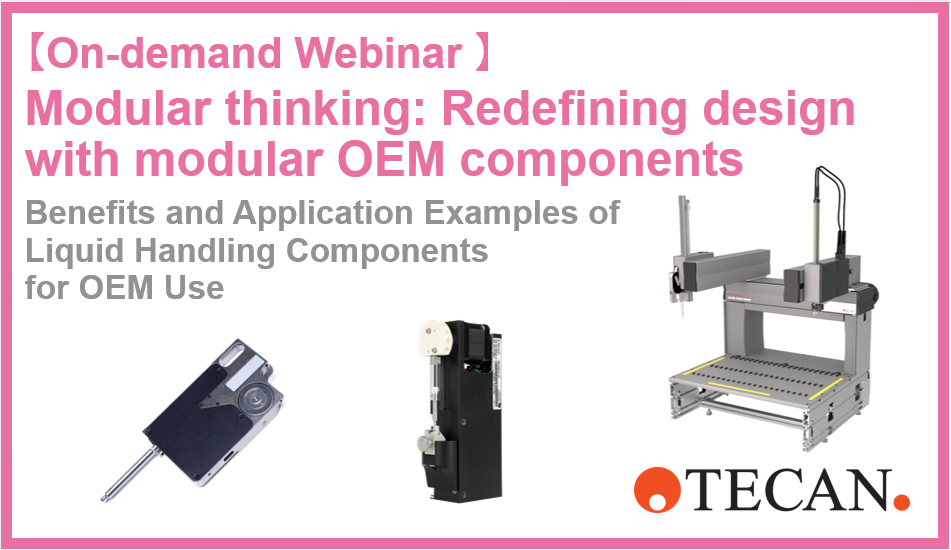
In equipment development, shortening time-to-market is a strategic priority that determines a company’s survival. Being first to market not only establishes a position as the “standard” in that category, but in today’s era of rapid technological innovation, the period during which a product is “in season” inevitably becomes shorter. This is where modularization of equipment comes into play. Modularization in equipment development is a methodology that involves breaking down complex systems into “independent parts with specific functions (modules) ” for design and assembly. Modularization enables the adoption of third-party components, allowing companies to focus their talent and time on enhancing the originality and uniqueness of the equipment under development, thereby accelerating time-to-market.
In this webinar, we will explain the benefits of modularization and present numerous case studies, including the development of Sysmex Corporation’s PS-10 specimen pretreatment device, which adopted Tecan’s OEM liquid control module. We will also introduce the new solenoid valve pump in the popular Cavro Xcalibur Pump series. We will explain the advantages it offers over conventional rotary valve types as well.